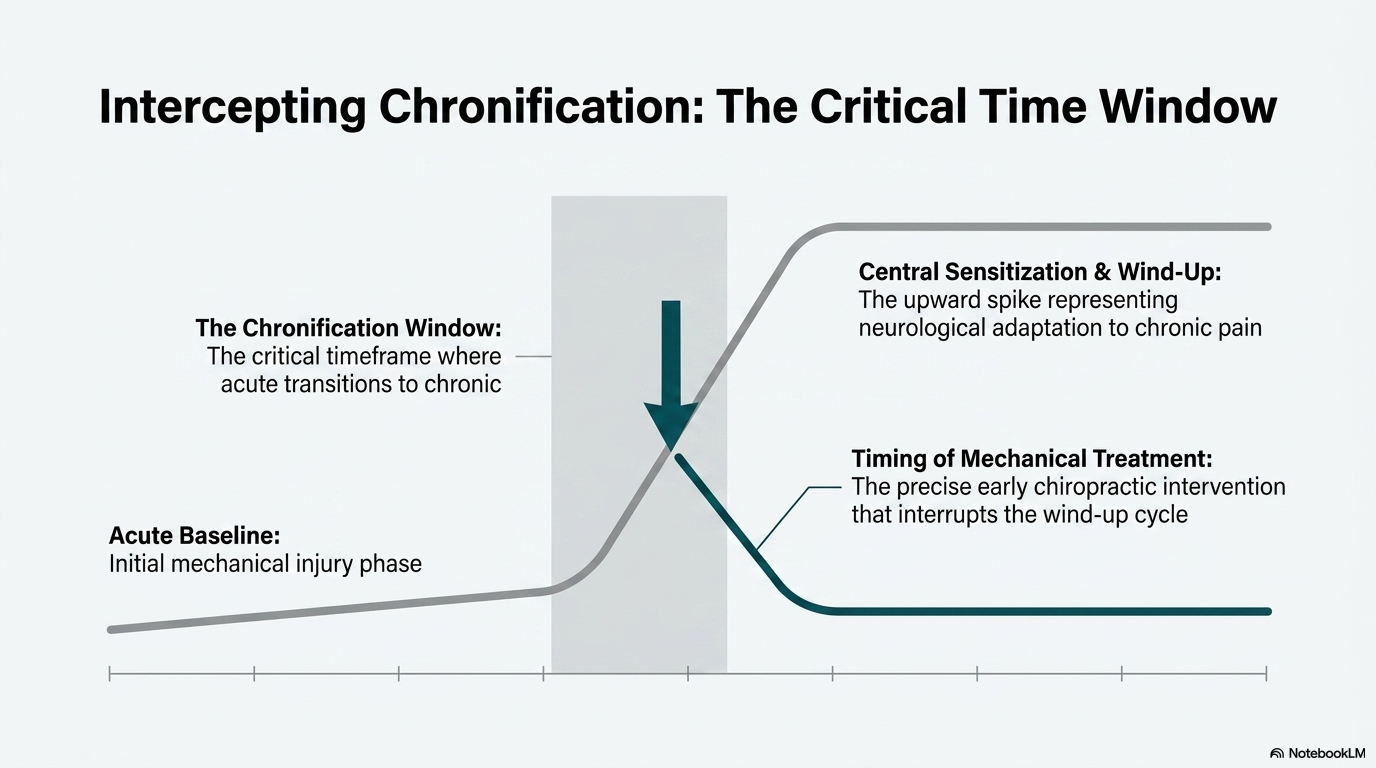
When most people think about the spine, they think about structure. Bones stacked on top of each other. Discs absorbing load. Nerves passing through channels. The architecture of the body’s central column. That structural picture is accurate, but it is incomplete in a way that matters clinically.
The spine is also one of the most sophisticated sensory organs in the body. And understanding that changes what spine care actually needs to accomplish.
The Spine as the Body’s Antenna
The facet joint capsules and the deep spinal muscles contain mechanoreceptors at a density that is among the highest anywhere in the human body. These are not passive structures. They are continuously active, generating a stream of sensory signals that travels upward into the spinal cord and brain in real time. That stream carries information about joint position, movement velocity, compression load, and tissue tension.
The nervous system uses this information for almost everything. Posture. Balance. The fine-tuned muscle coordination that keeps you upright and moving efficiently. Pain modulation. The brain’s map of your own body in space. Every one of these functions depends on the quality of the sensory signal coming from the spine.
When the spine is mechanically healthy and moving correctly, this system runs in the background without you noticing it. When it is not, the consequences reach well beyond where the problem sits.
What Disrupted Input Does
A spinal segment that has lost normal motion or is loading abnormally sends degraded sensory input upward. The mechanoreceptors in that joint capsule cannot report accurately on a joint that is not moving correctly. The signal they generate is distorted.
The brain and cerebellum, working with that distorted input, generate distorted output. Muscle coordination errors develop. The brain’s map of the painful area shifts, which is part of why chronic pain patients often have altered body awareness in the affected region. The descending pathways that normally suppress pain signals become less effective.
What started as a mechanical problem at a single spinal segment has effects at every level of the nervous system.
What Restoring Motion Actually Does to the Nervous System
When joint motion is restored to a dysfunctional segment, the mechanoreceptor signal normalizes. This is not a mechanical change alone. It is a neurological event.
The normalized input triggers inhibitory interneurons in the spinal cord that reduce pain signal transmission. This is the same system that explains why rubbing a painful area temporarily reduces pain. The sensory input from the corrected joint activates pathways that compete with and suppress the pain signals coming from the same region. The effect is measurable and begins immediately.
Further up the nervous system, the cerebellum and motor cortex begin receiving accurate position and movement information again. Motor patterns that had drifted toward compensation and guarding begin to recalibrate. The brain’s map of the area starts to normalize.
This is why manual treatment to a specific spinal segment often produces effects that feel disproportionate to what was done. The intervention is not primarily mechanical, though the mechanical component matters. It is primarily neurological.
Why This Matters for How Your Spine Is Evaluated and Treated
If the spine is a sensory system, then restoring its function is about more than relieving pressure or correcting alignment. It is about restoring the quality of information the nervous system depends on to run your body correctly.
That requires identifying which segments are not moving correctly and why. It requires a different kind of assessment than imaging provides. And it requires treatment aimed at the right level, which is why an accurate biomechanical evaluation is the foundation of effective care.
The structural picture of your spine matters. The sensory picture matters just as much.
Mechanoreceptors, Proprioception, and Why Spinal Motion Is Neurologically Active
The mechanoreceptive system of the spine is distributed across multiple tissue types: facet joint capsules, spinal ligaments, intervertebral discs, and the paraspinal muscles themselves. Each of these structures contains specialized mechanoreceptors that respond to different aspects of mechanical loading: compression, tension, shear, acceleration, and static position. The combined afferent output from these structures provides the central nervous system with a continuous, high-resolution map of spinal position and movement. This is not passive anatomy. It is an active sensory broadcast.1
The facet joint capsule contains the highest density of mechanoreceptors of any posterior spinal structure. Wyke described four receptor types in his research, with Type I (Ruffini-like corpuscles) providing tonic postural signals and Type II (Pacinian-like) responding to dynamic movement onset. The significance of this distribution is that the spine’s proprioceptive system is exquisitely sensitive to changes in segmental mechanics. It tracks more than gross motion; it tracks the fine-grained pattern of how each segment transitions through its range of movement. When this pattern is altered by restriction or hypermobility, the afferent output changes, and the central nervous system’s model of where the spine is and how it is moving becomes inaccurate.2
Johansson and Sojka (1991) described the interdependence of spinal mechanoreceptors and muscle spindle sensitivity in their work on fusimotor drive. Mechanoreceptors in spinal ligaments and joint capsules modulate the sensitivity of the muscle spindles in the surrounding musculature through gamma motor neuron pathways. This means that altered joint mechanics do not only affect position sense; they also alter the tonic level of muscle activation, contributing to both protective guarding and the postural compensation patterns that develop downstream from a dysfunctional segment.3
References
- Wyke B. Articular neurology and manipulative therapy. In: Glasgow EF, et al., eds. Aspects of Manipulative Therapy. 2nd ed. Churchill Livingstone; 1985:72-77.
- McLain RF. Mechanoreceptor endings in human thoracic and lumbar facet joints. Spine. 1994;19(5):495-501.
- Johansson H, Sojka P. Pathophysiological mechanisms involved in genesis and spread of muscular tension in occupational muscle pain and in chronic musculoskeletal pain syndromes: a hypothesis. Med Hypotheses. 1991;35(3):196-203.
- Panjabi MM. The stabilizing system of the spine. Part II. Neutral zone and instability hypothesis. J Spinal Disord. 1992;5(4):390-397.
Ready for a Complete Biomechanical Evaluation?
Schedule with Dr. McClean at McClean Chiropractic in Provo, Utah. Fellowship-trained. Biomechanics-focused. The most advanced spine assessment in Utah County.