A spinal fusion does what it is designed to do. It stabilizes an unstable segment, decompresses a nerve, or corrects a structural problem that had become severe enough to require surgical intervention. For the right patient with the right indication, it works. The hardware holds. The imaging looks clean. The acute problem is resolved.
And then, months later, the pain returns. Not always at the surgical level. Often above it. Sometimes below it. The patient is confused. The surgeon is frustrated. The surgery was successful. Why is the patient still struggling?
What Surgery Does Not Fix
A fusion resolves the structural problem at the treated segment. It does not change the mechanical environment that contributed to that problem developing in the first place. The load patterns, the compensation habits, the posture that has been placing abnormal stress on specific regions of the spine for years, those do not change because hardware was placed.
More specifically, fusing a spinal segment eliminates its motion. The segments above and below the fusion now carry the movement demands that the fused level can no longer accommodate. If those adjacent segments are already stressed, or if the load distribution through the spine is already suboptimal, the fusion accelerates those problems. The spine finds a new place to break down.
This is adjacent segment disease, and it is one of the most common reasons patients return with pain after an otherwise successful surgery.
The Mechanical Picture That Remains
After surgery, a patient’s spine has a different architecture than it did before. The biomechanics of a fused segment are not the same as those of a healthy mobile one. How forces travel through the spine changes. Which muscles are responsible for which movements changes. The compensation patterns that existed before surgery are now working around a permanent structural modification.
Most surgical follow-up protocols focus on the surgical site. Imaging confirms the hardware is intact. Pain levels are tracked. Physical therapy addresses strength and range of motion at a general level. What is less commonly evaluated is the full mechanical picture of how the fused spine is actually loading and moving as a system.
That evaluation matters because the forces that will eventually stress the adjacent segments are detectable before they produce symptoms. The compensation patterns that will determine long-term function are addressable while they are still flexible.
What Chiropractic Assessment and Care Adds Post-surgically
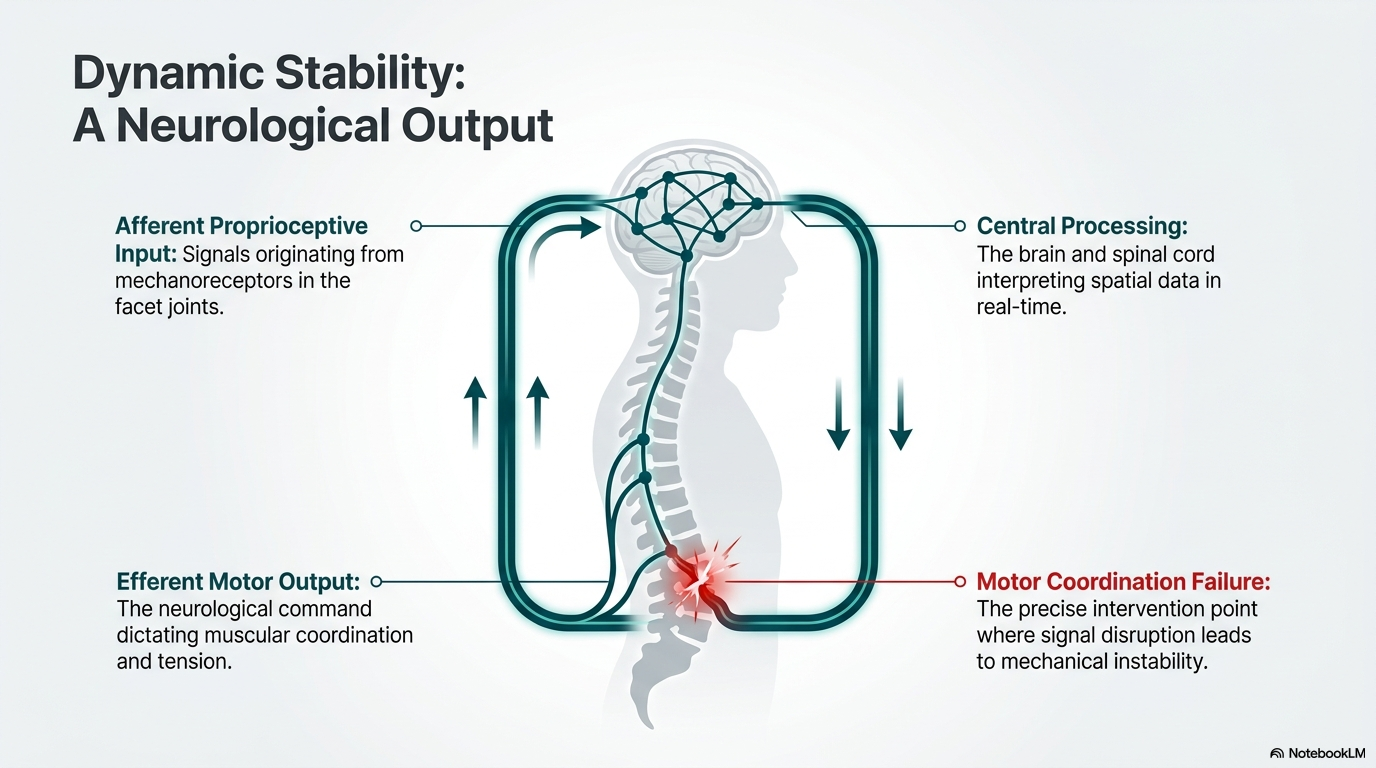
The goal after spine surgery is not to manipulate the fused segment. That is neither appropriate nor possible. The goal is to ensure that every other segment in the system is moving correctly, that the load distribution through the spine is as balanced as it can be given the new anatomy, and that the muscles coordinating movement around the fusion have accurate sensory input to work from.
Motion X-ray is particularly valuable in the post-surgical spine because it shows exactly which adjacent segments are moving too much to compensate for the fused level. That information guides where careful, appropriate treatment is directed and where it is not.
The spine above and below a fusion needs to do more work than it did before. Making sure it is equipped to do that work, mechanically and neurologically, is the difference between a patient who adapts well long-term and one who returns with adjacent segment problems within a few years.
For Patients Who Have Had Spine Surgery
If you have had spinal surgery and you are managing new or ongoing pain, the question worth asking is whether the full mechanical picture of your spine has been evaluated since the surgery. The question is how your spine is moving and loading as a whole system with its new anatomy, not only whether the hardware is intact.
If you are considering spinal surgery, understanding the mechanical environment that will remain after surgery, and having a plan for managing it, is part of making an informed decision about the procedure and its likely long-term outcomes.
Surgery solves a structural problem. Ongoing biomechanical care protects what surgery accomplished.
What the Research Shows About Adjacent Segment Disease
Adjacent segment degeneration is among the most documented complications of spinal fusion. Hilibrand and Robbins (2004) reviewed the literature on cervical spine fusion and found that adjacent segment disease developed at a rate of approximately 2.9 percent per year, with a 25.6 percent cumulative incidence at 10 years. Their analysis, published in Spine Journal, established that adjacent segment disease is not random; it occurs preferentially at levels that are biomechanically stressed by the fusion construct above and below them.1
Park and colleagues (2004) demonstrated in a prospective radiographic study published in Spine that range of motion at adjacent segments increases significantly following single-level lumbar fusion. The compensatory hypermobility at adjacent levels places the facet joints, disc, and ligamentous structures at those segments under greater mechanical demand than they were designed to tolerate. This increased demand accelerates the degenerative cascade at those levels, not as a coincidence but as a direct mechanical consequence of the fusion redistributing spinal mobility.2
The clinical implication of this research is that a successful fusion does not restore normal spinal biomechanics; it changes them. The levels above and below the fusion take on mechanical roles they were not adapted for. Without ongoing biomechanical surveillance and, where appropriate, manual treatment of those levels to maintain normal motion patterns, the patient with a fusion is on a predictable trajectory toward adjacent segment disease. The surgery may have been necessary. What happens to the spine afterward is still the patient’s problem to manage, and it is a mechanical problem.
References
- Hilibrand AS, Robbins M. Adjacent segment degeneration and adjacent segment disease: the consequences of spinal fusion? Spine J. 2004;4(6 Suppl):190S-194S.
- Park P, Garton HJ, Gala VC, Hoff JT, McGillicuddy JE. Adjacent segment disease after lumbar or lumbosacral fusion: review of the literature. Spine. 2004;29(17):1938-1944.
- Harrop JS, Youssef JA, Maltenfort M, et al. Lumbar adjacent segment degeneration and disease after arthrodesis and total disc arthroplasty. Spine. 2008;33(15):1701-1707.
- Panjabi MM. The stabilizing system of the spine. Part I. Function, dysfunction, adaptation, and enhancement. J Spinal Disord. 1992;5(4):383-389.
Ready for a Complete Biomechanical Evaluation?
Schedule with Dr. McClean at McClean Chiropractic in Provo, Utah. Fellowship-trained. Biomechanics-focused. The most advanced spine assessment in Utah County.